
Can You Pressure Wash an Asphalt Driveway? Why We Say No, and What Concrete Gets Instead
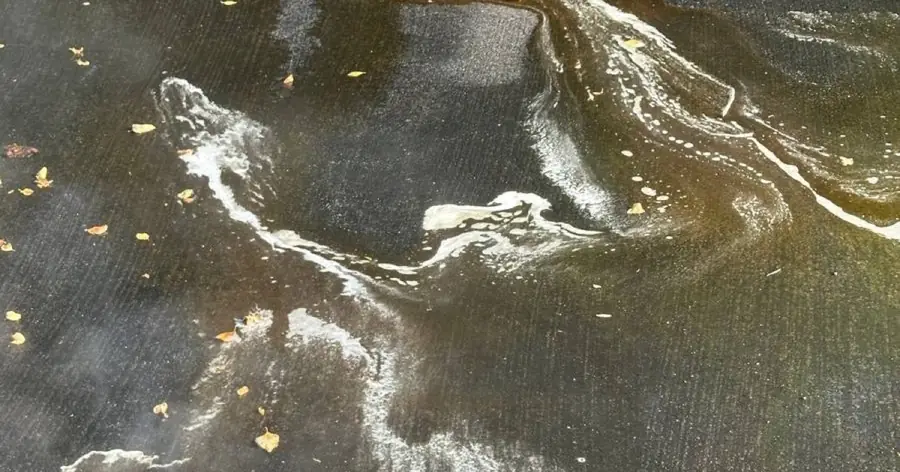
Short answer: no, not the way you are picturing it. We get asked to pressure wash asphalt driveways constantly, and we turn it down every time. It is not a scheduling problem or an upsell. Running a surface cleaner across blacktop damages it, and the damage does not stop when we drive away. Here is what is actually going on, so you can see why the answer changes completely depending on which material you have.
The short version
- Concrete: yes. Surface clean it, degrease it, treat the organic growth, rinse it. It cleans up beautifully.
- Asphalt: no. It is held together by oil, and pressure, degreaser and strong solution all attack that oil.
- What asphalt gets from us: soaked before we work above it, rinsed clean after, at low pressure, no charge.
- If asphalt looks tired: that is oxidation, not dirt. It needs sealcoating from a paving contractor.
- Most local homes have both. The concrete apron, walk and garage floor can still be done properly.
The two materials are not related
They sit next to each other and hold the same cars, so people assume they are versions of the same thing. They are not.
Concrete is cement mixed with aggregate, meaning stone and sand. Water starts a chemical reaction and the cement cures into a hard rigid slab that holds the stone in a mineral matrix. It does not care about oil. It does not care about bleach. It does not soften in the sun. That is why a proper concrete cleaning is aggressive: a rotating surface cleaner at pressure, a degreaser on the oil spots, cleaning solution on the algae and mildew, then a full rinse. The slab is unbothered by all of it.
Asphalt, also called blacktop, is stone and sand held together with bitumen, the heavy oil left at the end of the petroleum refining process. It is not cured, it is glued. It stays flexible its whole life, which is exactly why it survives our freeze and thaw cycles better than concrete does. It also means everything that dissolves or blasts oil is a threat to the driveway itself.
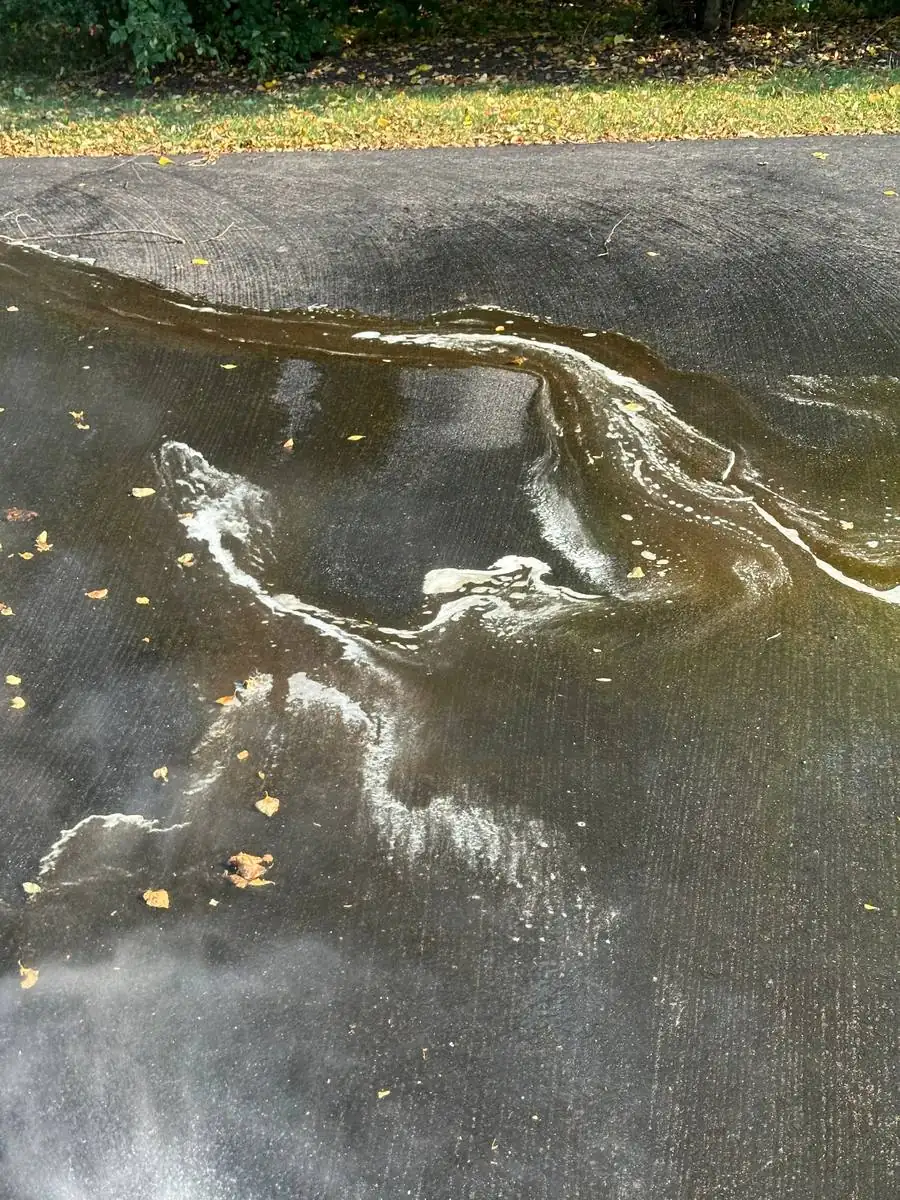
What a surface cleaner does to blacktop
A surface cleaner is a housing with two or four jets on a spinning bar. On concrete it is the right tool, because it puts a lot of energy down evenly and strips years of grime in one pass.
On asphalt that same energy cuts the binder out from between the stones. The stone lets go, the jets take it with them, and you are left with a rough patch that was smooth ten seconds earlier. If the wand pauses, you get a hole. That hole is now the low point of the driveway, so every rainfall drains into it, works down into the base underneath and widens it. What started as a cosmetic job turns into pavement failure, and the only fix is patching or replacement.
The same applies to a narrow nozzle on a hand wand. A zero or fifteen degree tip held close to blacktop will open the surface in about a second.
If you want a number: the widely cited safe working range on asphalt is roughly 1,200 to 1,500 PSI through a wide 25 to 40 degree tip held 8 to 12 inches off the surface and never held still, and above roughly 2,000 PSI the binder wears away and the aggregate starts releasing. Those figures are for a hand wand. There is no surface cleaner setting that makes it safe, because the tool is designed to concentrate energy.
Degreaser is the worse mistake
This is the one that surprises people, and it is the one that costs the most money.
There is an oil drip in the middle of the driveway. It is the obvious thing to point at when you meet a cleaner. A degreaser is designed to break down oil and lift it off the surface.
The driveway is made of oil. The degreaser cannot distinguish between the motor oil you want gone and the bitumen holding the pavement together, so it goes after both. Put a strong degreaser on blacktop and let it dwell and you get a soft spot, then a depression, then a hole where the stain was. The stain is gone and so is the driveway.
On concrete this is a routine job. The slab is mineral, the stain sits in the pores, the degreaser lifts it and rinses away. Same product, same technician, opposite outcome, purely because of what is underneath.
Why we soak your driveway before we wash the house
If you have watched us work, you have seen us spend the first several minutes putting plain water on plants, on the lawn and on the driveway before anything else happens. On asphalt that is not politeness, it is damage control.
Cleaning solution running off a house or roof lands somewhere. A dilute house wash mix hitting already wet asphalt and getting flushed immediately is a non event. A roof wash strength mix left to pool, sit in the sun and dry on blacktop is a different story: it discolors, it turns brown, and at strength it will etch into the surface. Wet pavement dilutes what lands on it and stops it soaking in, and the final flush carries it off before it can dry anywhere. The same reasoning drives our full roof soft washing and rinse process.
So what does an asphalt driveway actually get?
A pre soak before we work above it, and a proper rinse at the end with a wide fan tip at low pressure. That takes off surface dirt, pollen, grit and anything that dripped down during the job, and it leaves the pavement as good as it was when we arrived. We do not charge for it, because it is part of doing the job above it correctly rather than a service of its own.
Between visits, the effective maintenance on asphalt is unglamorous: sweep or blow it so grit and leaf litter do not sit and hold moisture, keep the edges clear, and deal with a fresh oil drip promptly with cat litter or an absorbent rather than a solvent. Anything sold as a heavy duty driveway cleaner deserves a careful look at the label before it goes anywhere near blacktop.
Concrete is a genuinely different service
None of the above applies to your concrete, and most homes here have a fair amount of it. The apron where the driveway meets the street, the front walk, the stoop, the garage floor, the patio and the public sidewalk are all fair game for a full clean.
On concrete we surface clean at pressure for an even finish with no wand stripes, treat organic growth so the green and black come back slowly instead of in three weeks, degrease the oil spots, and rinse everything down. It is one of the most visible improvements available on a property, which is part of why the split confuses people: the concrete result is dramatic, so the assumption is that the asphalt would look the same. It would not. It would look damaged.
Details are on our power washing and soft washing page.
Which one do you have?
Asphalt is black when new and fades to a chalky charcoal grey. It is poured as one continuous flexible sheet with no control joints, and on a hot July afternoon it is soft enough that a motorcycle kickstand or a trailer jack leaves a dent.
Concrete is pale grey, rigid, and divided into panels by tooled or sawn control joints every few feet. If your driveway has a grid of straight lines across it, it is concrete.
Around Palatine, Arlington Heights and the North Shore you see plenty of both, and often on the same property. An asphalt driveway that meets a concrete apron at the street is the most common arrangement we run into. In that case the apron and walks get the full treatment while the asphalt gets a rinse, and the line where the treatment changes is the line where the material changes.
What our winters do to each one
Both materials struggle here, in opposite ways, which is worth knowing before you decide what to spend money on.
Concrete is vulnerable to deicing salt. Salt drives more water into the pores, that water freezes and expands, and over repeated cycles the surface scales and spalls. This is why so much local concrete looks pitted and flaky at the surface while remaining structurally sound underneath. Cleaning helps the appearance, but a spalled slab is spalled.
Asphalt handles freeze and thaw better because it flexes rather than cracks, but it fades. Sun and oxygen break down the binder at the very surface, the black goes grey, and fine cracks open up. That is oxidation, not dirt, and it is the real reason a ten year old driveway looks tired.
If you want your asphalt to look new again
The answer is sealcoating, and it is a paving contractor's job rather than ours. They clean the surface, fill the cracks and apply fresh sealer, which restores the black and puts a wear layer over the oxidized surface.
One local thing worth knowing when you get quotes: Evanston, Winnetka, Riverwoods and South Barrington have banned coal tar based sealants, and the Illinois Department of Public Health counts at least sixteen Illinois municipalities with bans and a dozen more with restrictions on government use. Coal tar sealer is high in polycyclic aromatic hydrocarbons, which is the reason for the bans. Asphalt emulsion and acrylic sealers are the usual alternatives. Ask which product a contractor plans to use before you sign, particularly if you are in one of those villages.
Asking us for a driveway quote
Tell us what the driveway is made of, or send a photo and we will tell you. If it is concrete, we will quote it. If it is asphalt, we will say so, quote the concrete you do have, and rinse the blacktop as part of whatever else we are doing on the property.
We work across Palatine, Arlington Heights, Winnetka, Wilmette, Glencoe, Highland Park and Northbrook.
Request a free estimate or call and text 224-458-2496. Turning down work we could damage your property doing is cheaper for everyone than the conversation that follows the other choice.
Common questions
Can you pressure wash an asphalt driveway at all?
Only as a rinse: low pressure, a wide fan tip, kept moving, no surface cleaner and no chemicals. That removes loose dirt. It will not restore color, because faded asphalt is oxidized rather than dirty.
What PSI is safe on asphalt?
Roughly 1,200 to 1,500 PSI through a 25 to 40 degree tip at 8 to 12 inches, moving constantly. Past about 2,000 PSI the binder wears and the stone starts letting go. A surface cleaner is outside this discussion entirely, because it concentrates energy by design.
Why do so many videos show driveways being pressure washed then?
Because those driveways are concrete. In much of the country a driveway is concrete by default, and on concrete every one of those techniques is correct. The instruction that travels is "pressure wash your driveway" with the material quietly assumed.
Can you get the oil stain out of my asphalt driveway?
Not with a degreaser, no. Degreaser dissolves oil and the pavement is bound with oil, so strong product in one spot means a soft patch or a hole. Fresh drips can be pulled up with an absorbent. An old set in stain is a case for sealcoating.
Will your roof or house wash solution stain my driveway?
Not the way we work it. The driveway gets soaked with plain water before any solution goes on the house or roof, and flushed again at the end, so nothing sits and dries on it. Solution left to dry on blacktop is what causes brown discoloration.
My driveway is asphalt but the apron and walk are concrete. What happens?
We clean the concrete properly and rinse the asphalt. That is the most common setup on local properties, and the visible improvement at the street end is usually the part people wanted anyway.
Author: Pane Pal Exterior Cleaning Team
Based in Palatine, IL, the Pane Pal team specializes in expert exterior cleaning across the Chicago North Shore. From delicate cedar shake roofs in Winnetka to solar panels in Highland Park, we bring years of specialized knowledge to protect and beautify your home.
Protect Your Home with Professional Exterior Cleaning
Ready to restore your home's curb appeal safely and effectively? Contact our expert team today for a comprehensive evaluation.